

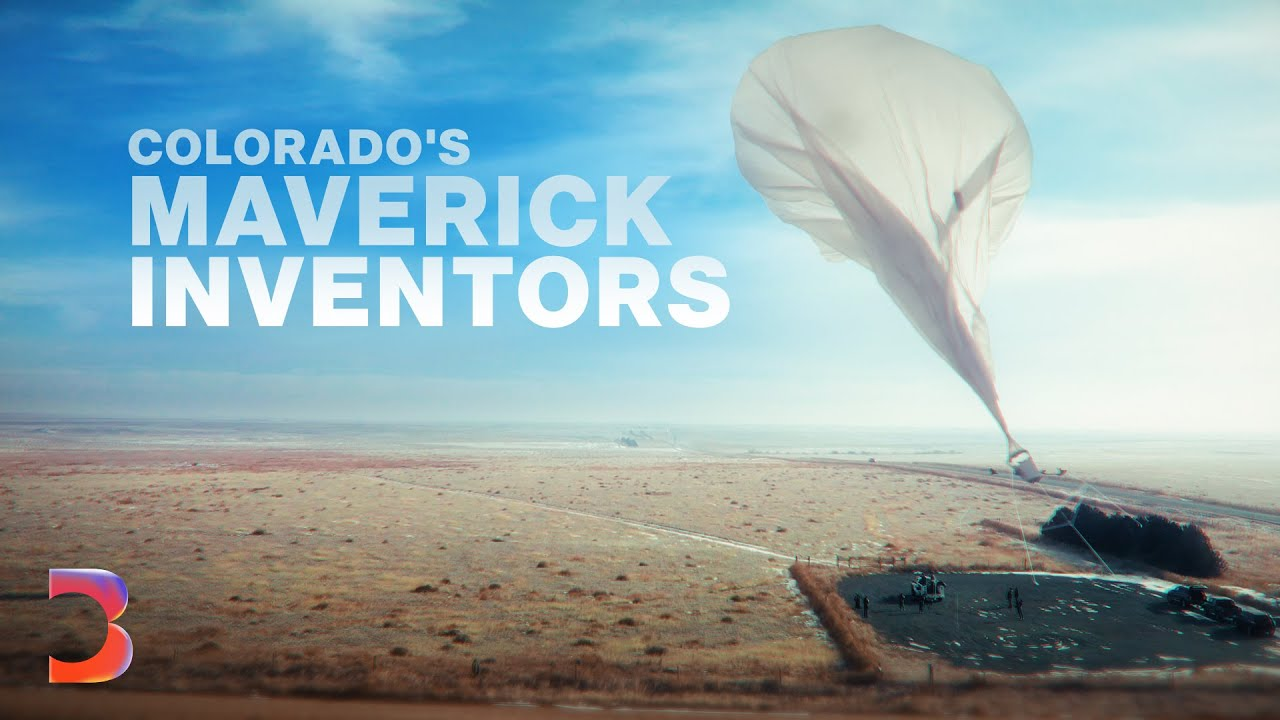
This video explores three innovative technologies and their potential impact on various industries and issues. It begins with Biofire's smart gun development led by Kai Kloepfer, who aims to reduce accidental gun incidents using fingerprint and facial recognition technology. The video elaborates on the technological challenges and societal controversies involved in producing smart guns.
Next, the video introduces Urban Sky, a company utilizing miniaturized high-altitude balloon technology to fill the gap between traditional aerial surveillance and satellite imaging. The lightweight and reusable balloons offer detailed, cost-effective images to monitor environmental and social activities, demonstrating practical applications in wildfire detection and climate change observation.
Main takeaways from the video:
Please remember to turn on the CC button to view the subtitles.
Key Vocabularies and Common Phrases:
1. taxidermy [ˈtæksəˌdɜːrmi] - (noun) - The art of preparing, stuffing, and mounting the skins of animals with lifelike effect. - Synonyms: (stuffing, mounting, preserving)
Here is Denver, Colorado's top fine dining establishment, the Buckhorn exchange. It tells you everything you need to know about the city. Guns, whiskey, taxidermy.
2. biometric [ˌbaɪoʊˈmɛtrɪk] - (adjective) - Relating to the measurement and statistical analysis of people's physical and behavioral characteristics. - Synonyms: (identification, authentication, recognition)
Facial recognition is a cutting edge biometric, which means it requires orders of magnitude more processing power.
3. prototype [ˈproʊtəˌtaɪp] - (noun) - A first or preliminary version of a device or vehicle from which other forms are developed. - Synonyms: (model, sample, preliminary)
Today we've got one of our Mark II prototypes, pre production units of the Mars smart gun.
4. paradigm [ˈpærəˌdaɪm] - (noun) - A typical example or pattern of something; a model. - Synonyms: (pattern, example, model)
Eventually, we want to get to the paradigm where these systems are reusable, the way something like a parachute is reusable.
5. controversy [ˈkɒntrəˌvɜːrsi] - (noun) - Disagreement, typically when prolonged, public, and heated. - Synonyms: (debate, dispute, argument)
That, as Kai has a talent for doing, is putting the controversy mildly.
6. miniaturize [ˈmɪniəˌʧəˌraɪz] - (verb) - To make something much smaller on the same scale or in a new scale. - Synonyms: (reduce, diminish, shrink)
Our big bet was that sensors and components would miniaturize to the point that we could make very powerful high resolution imaging systems.
7. espionage [ˈɛspiəˌnɑːʒ] - (noun) - The practice of spying or using spies, typically by governments to obtain political and military information. - Synonyms: (spying, infiltration, surveillance)
So in case people are worried, it's not like espionage. You cannot see a person, right?
8. mandate [ˈmændeɪt] - (verb) - To officially command or instruct someone to do something. - Synonyms: (order, command, decree)
For his part, Kai's not interested in mandating or even advertising his product.
9. stratosphere [ˈstrætəˌsfɪr] - (noun) - The layer of the earth's atmosphere above the troposphere, which extends from about 10 km to 50 km above the Earth's surface. - Synonyms: (upper atmosphere, sky, heavens)
We saw a path to finally make the stratosphere and stratospheric balloons viable.
10. counterpart [ˈkaʊntərˌpɑːrt] - (noun) - A person or thing that corresponds to or has the same function as another person or thing in a different place or situation. - Synonyms: (equivalent, peer, equal)
Urban skies images might look a lot like satellite imagery, but they're much, much more detailed and can be taken more cheaply and frequently tracking things like wildfires, the effects of climate change, and all manner of human activity.
Smart Guns, Rockets & Balloons in Denver's Tech Scene
Here is Denver, Colorado's top fine dining establishment, the Buckhorn exchange. It tells you everything you need to know about the city. Guns, whiskey, taxidermy. Yes, this is Denver in a nutshell. God bless the west. Okay, okay. The city is actually nothing like this. It's mostly like this sunshine, even in the winter. Stoners and non-stoners uniting in their celebration of the great outdoors. Enjoy.
Oh, hi. I didn't see you there. Normally at this part of the program, I would be walking through the front door of a startup. But on today's episode, we cannot do that for this startup wants to remain secret because its nerds are making a smart gun. That Navy Seal you see before you is holding a gun made by biofire. Its very, very big claim is that it's the first company to make a smart gun that actually works. That's right. James Bond style fingerprint and facial recognition. The gun only fires if the right person is holding it. It knows somebody's holding onto it, but no matter how much he pulls the trigger, nothing's going to happen because the system is not unlocked.
The person who started biofire is Kai Kloepfer. He's all of 25 years old and has been working on making this gun for ten years, a project he started shortly after the Aurora theater shooting. At the time, it was like the worst mass shooting in history and happened right just down the road here. From wherever grew up, I was fortunate enough to not have to think about gun violence or gun deaths. And that was really my first sort of encounter with the topic. Right. I was just starting to grow up, just starting to think about these kinds of topics as a 15-year-old and really start to think about how. How could we do something about this?
I sort of think about this concept of smart guy. By no means am I the first person to think about this. Obviously, it's been science fiction forever, but nobody had ever really built a working smart guy. Okay, so you're 15. Yep. Doing some policy that you're kind of, you're inspired. Yeah. I was never a policy person. Right. I'm an engineer. I've been forced to become a little bit more of one over the last ten years. But I was an engineer. I was a socially awkward nerd, a bona fide nerd who clinched his nerd bona fides by getting an award at the very prestigious Intel International Science and Engineering Fair.
So, okay, so for people who don't know, I mean, this is like no joke. This is like thousands of the world's smartest. The year I went it was the top 1500 out of over 8 million people who competed across the year. Right? Yeah. Like this is the top of the top. Yeah, it's as high as it gets, I think, for the science fair world. At the time, I was mostly an electrical engineer and I could sort of fake my way through some mechanical engineering, so built a pretty good electrical system and a really mechanical system, sort of slapped them together into this kind of gun-shaped object, not an actual firearm in any way.
I wasn't allowed to bring a gun to the science fair. Quite obviously, I was very surprised by all this. I'd done a lot project before—three quarters of the time people didn't believe that I had actually built them. They thought my parents had did them. I mean this in the nicest way possible. Dad, I'm sorry, but my dad needs help, like turning his iPad on. We'll take it slow.
And after ten years of toil, Kai is understandably proud that his business finally has a product to sell. Cool, good, after you. Today we've got one of our Mark II prototypes, pre-production units of the Mars smart gun. So as soon as I start to interact with it, I'm going to see those white lights. Lights basically mean that it's active. It sees that somebody's picked it up, but it hasn't recognized the user yet, so it's still locked.
To set up the gun, you register your face and fingerprints on this device in less than a minute, where you can also add and delete other users. If you're not registered, nothing. Fingerprints are very well optimized, very commercially mature. You don't need a lot of processing power to run them appropriately.
Facial recognition is a cutting edge biometric, which means it requires orders of magnitude more processing power. So where previously we were able to just use like little microcontrollers and things like that to do fingerprints, we've had to basically build an entire computer hardened for the system that works inside of a gun to be able to run facial recognition at the speeds that our customers demand.
I've shot guns before, but I'm far from a gun enthusiast. In many ways, I'm biofire's target audience. A dad who wants to keep his family safe, but who also thinks having a gun at home probably ends up more dangerous than good.
Still, old gunner knew I needed a few pointers. I would try to lean forward, like just like lean, like lean into it a little bit. Ah, yeah, there you go. Okay. And again, the target's like less than 10ft away, so you don't need to worry too much about aiming. So point that out. Sorry.
The target is like 100 plus yards away, and Ashley is about to do a marksman level shorter shot. Here. Am I cool? It's a try. Yep. Whoo.
There you go. It still had more kick than I thought it was going to. It's all good. It kicks, and from my experience, it works. The question is, will it sell? Several companies have tried and failed to make a smart gun because it's really hard to do and not just because you're mixing sensitive electronics with regular explosions.
Okay, so you've chosen to do a startup doing this incredibly hard technology and then to weigh it into, like, a second amendment sort of issue. Right. So this is like nightmare. Yeah.
Keeps it interesting that, as Kai has a talent for doing, is putting the controversy mildly. Pro-gun folks hate these things because they fear that one day the government will use the existence of a working smart gun to ban the dumb ones. Even flirting with smart guns leads to death threats and financial risks, one of the reasons biofires. Investors prefer to stay anonymous, and plenty of anti-gun folks don't like them because, you know, they're guns. For his part, Kai's not interested in mandating or even advertising his product.
Biofire, he says, is just here to provide choices and maybe save lives. The key thing that we are trying to solve, which I think we could completely solve, is children and teenagers getting access to firearms.
Firearms are now the leading cause of death for children and teenagers in America. They surpass motor vehicle accidents for the first time in 2020. I've never talked to a gun owner who wanted their kid to find their gun. And so we think that by building technology that, you know, basically works with the gun owner to enforce what they're already looking to do, allows us to really actually address that portion of the challenge of basically gun deaths in America.
The final version of Biofire's gun arrived in April with this funky Sci-Fi look. It's definitely more halo than Red Dead redemption, but how well it will sell is anyone's guess. We want it to look modern and futuristic and a little different than everything else that's on the market. Obviously, when I saw that one, I was like, it does have a little Sci-Fi thing going on. And again, we don't want it to look too normal, but we don't want it to look like only, you know, something that a Sci-Fi nerd would like myself like a cyber truck or something? Yeah, I was trying to not say that.
Have you ever had that thing, man, where you're hanging out on a bench and looking at the clouds, and you're like, there's a dragon. There's a turtle. Hey, there's a jellyfish. Wait, I think that jellyfish has a camera on it. I think that jellyfish is watching me. It is. It is. There is a suspected Chinese spy balloon that's been hovering over the northern us.
Yes. There was that moment that the world looked transfixed upon our visitor from China. What China didn't know, though, was that America has its own super high tech balloon program, able to be launched by hoodie-wearing dudes wherever they can find parking.
We saw a path to finally make the stratosphere and stratospheric balloons viable. This super old technology that has never really been able to become broadly applicable. The makers of this fancy balloon, Andrew and Jared, work here at Urban sky. The basic idea is that high altitude balloons can be used to capture lots of imagery of the world filling the stratosphere-sized gap between other aerial options.
You've got drones at one layer and planes at one layer, and then there's this huge jump up to satellites, and there's just kind of, like, nothing in between. Yeah, I mean, we say it sometimes like we somewhat view ourselves as, like, the SpaceX of the stratosphere. Urban skies images might look a lot like satellite imagery, but they're much, much more detailed and can be taken more cheaply and frequently tracking things like wildfires, the effects of climate change, and all manner of human activity.
You know, you can see cars, you can see features on roofs, you can see landscaping, you can see light post power line. So in case people are worried, it's not like espionage. You cannot see a person, right? Yeah, you cannot see a person. We have no intention of doing that. Yeah.
Both men have serious history with balloons. They used to work for Worldview, which makes massive stratospheric balloons and also takes pictures with them. The problem, though, is that the balloons are expensive and take many hours and a ton of people to launch.
Urban sky is trying to make ballooning quick and easy. Our big bet was that sensors and components would miniaturize to the point that we could make very powerful high-resolution imaging systems in a very lightweight package.
I know the first time I described this company to someone, they're gonna be like, how do they control this thing? It's just gonna fall in some city on somebody's head. You know, I mean, it's pretty obvious concern. Yeah, well, I mean, at a high level, we do control it. So it's like, it's not a balloon that's just gonna fall out of the sky and go somewhere random. We know pretty precisely exactly what altitude our balloon will float at. Then you can think of it like we're in, like, the currents of the ocean, like they're fairly uniform, that we're moving in a general direction.
When we get to a float altitude, when it's time to come down, mission control sends a signal, and the balloon gently deflates. Nice, easy landing system's in great condition. All right. This is the balloon-making operation. Welcome to the balloon manufacturing. Yeah. Yes. They're willing to show us their balloons, just not tell us what they're made of. It's like a plastic or. Yeah, we can speak to it a little bit. Some of it's a secret in terms of what it is, but can I touch it? Yeah, yeah, go for it.
It feels light, which, it turns out, is important for a balloon and everything attached to it. This is the moneymaker. This is the moneymaker. This is one of the moneymakers. So we have several different imaging payloads that we operate. This entire thing you see here weighs less than six pounds. This is a wildfire monitoring system. So the guts of this is basically a thermal infrared camera.
So, NASA and the air force have funded this system, and we think it'll have a ton of value for doing early detection of wildfires. And in true Colorado nature loving fashion, they also want to make it reusable. It was always a little bit heartbreaking to see this literal mountain of thousands of pounds of plastic get put in a dumpster. What's the most you've reused? One, three times for one balloon. So, yeah, we can get several reuses out of a balloon eventually.
We want to get to the paradigm where these systems are reusable, the way something like a parachute is reusable, where you can use the same system hundreds of times. Okay, let's see this thing in its natural habitat. Time for a field trip.
So, we found this kind of, like, empty little carve-out of area, but you guys could just be on the side of the road, or if it's safe and legal to park, we can launch from there. Yeah, you kind of just need whatever's as big as the truck, right?
Right. Ready for Phil. All right, here we go. Is there something you say up and away. Oh, wow. Is it gonna inflate, like. And look like a big teardrop? It is. So it's only about 10% full right now. Okay. So that gas is expanding as it gets higher and higher, and the atmosphere gets less and less dense as the balloon went up and up like a memory from childhood, I was dangerously close to feeling something intimate about a piece of inflated plastic. I don't know, probably just the mountain air.
If you're in Denver itself, it's all beer and pot shops and dumb bridges. Toss in some dogs and joggers and you get the idea. Of course, what you want to do is get to the great outdoors. I mean, this might as well be me heading to Mordor. It's weird and beautiful, and it's everywhere in Colorado.
Colorado is the kind of place where you can put on some waders, hop in a stream, and run into a rocket scientist. Meet Joe Laurenti, the CEO of rocket engine maker Ursa Major. We are on the big Thompson river, pretty in the middle of nowhere as far as Colorado towns go. This is pretty normal Colorado fishing experience that you drive these rivers, find a spot to pull off the road, and go find fish. Yeah.
And what are we gonna try to catch? What's our goal? Some trout. All right. All right, man. Excited. We just want to cast this out, kind of let the river take it, but otherwise the bob's staying on top. Yeah, just pull it out like that. Exactly. Cause you want that yellow line to go all the way to the end. So just do that a couple more times. Yeah, and don't be afraid to have too much line. I just don't want to hit you. There you go. That's perfect.
Don't lie to me, Joe. This is 30 minutes from the office, so you don't get that in a lot of other places. Yeah. Is there like changing as all that? Californians are coming and I don't tend to notice. They come help us build rocket engines. Yeah. Yeah. All right. Watch your face. All right. It's all also low risk with these small trout flies because the hook is like centimeter long. I'd still feel bad if I hooked a CEO. Ursa major does its work here in a suburb of Denver where it can fire its big, loud engines.
Where we're looking right now is our. That's too Hadley engines facing us. So we'll see fire coming right at us. Okay. See some fire. Cool. That'll loosen up some seals. The world today is full of rocket startups, and each one is trying to make their own rockets and their own rocket engines. But as many of them have learned, engines blow up. Okay. You just saw bright flash. It's what makes building rockets so hard.
Ursa would like them to consider a new idea. Don't bother making engines buy them from us. Like, I've noticed though, all these rocket companies I go to, there is this. The engine is like the. It's like the sexiest part. It's like. It's romantic. Yeah. It's like we're doing something big and important, and everybody wants to make their own engine, even though it causes all this suffering and financial ruin.
How do you sort of convince people to get off that a piece of it is kind of breaking down that romantic notion? There are a few reasons companies buy engines from us. The most common, or the easiest sale, is the make versus buy decision. If a company is just starting, they need an engine. We now have engines available.
That's almost a no brainer. We can save them five years, tens, or hundreds of millions of dollars. The other opportunity is if there's been a failure, if you might have, maybe it's your first flight, maybe it's your 50th flight. If you have a launch failure and you're facing down another five-year engine development campaign to fix that. Right.
Because if there's a failure, you have to shut down, figure out what runs, come back, and prove that the fix works. It's almost an easier story to say. There's a known reliable engine on the market that we're switching to versus diving back into. Why did our engine fail? Is there a fear that the people who are going to make it have already kind of made it, and they're already making their own engines, and they sort of need these newcomer rocket companies that hadn't already made that commitment and maybe it's too late.
I think I would have that fear if NASA and the air Force and the space Force and every commercial company. We're saying today we are completely happy with how we are getting to Orbitz. Completely met, but that's absolutely not the case. The company is off to a good start with big orders from several startups, plus some deals with the air force. They sell a relatively small rocket engine, Hadley, for just under a million dollars. Their next size up, Ripley, is still in development.
This is a turbo pump assembly for Ripley. Can we for a moment talk nerd out on turbo pumps? Yes, it's true, I'm an engine geek, but objectively, Ursa is one of those badass companies with badass hardware. The turbo pump really powers the engine. It's. It's the heart of the engine, really. You're taking things from one extreme to another. So you're taking -300-degree liquid oxygen, you're combusting it to thousands of degrees, you're using that to drive a turbine that needs to go from zero to tens of thousands of rpms, even SpaceX for years didn't build its own turbo pump.
They had a company build it. We've got an incredible turbo machinery team all made by badass people. I'm a big fan of paragliding, skydiving, and base jumping, like propulsion technician Margot Rozinga. I love the way this company operates. I think it's so. It makes so much sense. The way that we exist allows other companies to exist.
It's almost funny that it hasn't happened sooner because you're looking at companies like Pratt and Whitney or Rolls Royce. They're making engines. Boeing's not making their own engines. That would be crazy. That's time-consuming. That's the hard part, you know? You know, technology overall is notoriously kind of skews mail. And in my experience, aerospace companies, it's like nine to one.
Is that weird or is that changing or. There's definitely significantly more women here than I'm used to working with. Yeah, it's really nice, actually. Cause I don't feel like I'm, like, in a fishbowl or some kind of zoo animal. And, of course, for practical reasons, it has to be here. This facility is pretty interesting because most of the places I've been, if you think about SpaceX or blue origin as examples, you're building in engines in California or Washington, and then you're going all the way to Texas to do most of the tests.
You don't have this kind of feedback. It just slows everything down. We just saw. I mean, you can do everything in just, like, a few hundred yards from each other. Yeah, it's very unique. We definitely could not fire engines like you saw today in Los Angeles because in Colorado, you can be as loud as you like. Holy. That was, like, a lot better than anything I've seen a lot of times.
It's a unique experience out here. Holy cow, man. I mean, that was so freaking loud. Cause even when I've seen launches, you're a mile away. We're, like, 200 yards. That was cool. And with that, I did Colorado the way you're supposed to. Guns on the way in. Glorious fire. Spigot on the way out.
Adam Klein in golden shoulders. Please play us off. Moved away from Denver, Colorado. I was all alone, all alone, all alone, and I made a huge mistake. I moved away from Denver, Colorado, and I don't know why. I don't know why. Moved away from Denver, Colorado I was all alone.
Technology, Innovation, Entrepreneurship, Smart Guns, High-Altitude Balloons, Aerospace, Bloomberg Originals