

The world of photography has undergone remarkable transformations since its inception. Though today we are accustomed to the conveniences of digital technology, it is essential to recognize the extraordinary ingenuity and mechanics that underpin the classic film cameras. One such significant mechanical wonder emerged in the 30s—the mechanical stroboscope, a device that allowed precise measurement of shutter speeds. In this article, we will embark on an enlightening journey exploring the interaction between engineering, physics, and artistry that has shaped photography into what it is today.
The Legacy of Mechanical Photography
In the early 20th century, photography was still in its infancy. It was a time when pioneers in photography were not only exploring capturing images but also finding ways to enhance the quality of those images. This period saw the rise of meticulous craftsmanship in camera production, prominently led by companies like Leica. The renowned German company made its name by introducing technologically advanced models that were unrivalled in their quality and precision.
The Heart of the Camera: The Shutter
At the center of camera design is the shutter, a mechanism that determines the duration of light exposure onto the film—often referred to as the sensor in modern digital cameras. The shutter speed is critical; too long of an exposure results in overexposure, creating blurry images, while too short results in underexposure, yielding dark and unsuitable photographs.
The old mechanical designs, including those created by Leica, integrated a dial that allowed photographers to set the shutter speed manually, providing them with complete control over their exposure settings. This mechanical marvel became a cornerstone in photography, leading the way for the development of even more sophisticated systems.
Understanding the Mechanical Stroboscope
One remarkable invention from this era—an intricate mechanical stroboscope—was pivotal for camera technicians to fine-tune shutter speeds with incredible accuracy. This device utilizes the principle of stroboscopic effects, where a light flashes at a specific frequency to freeze motion, allowing a visual snapshot of rotating or moving objects.
How It Functions
The stroboscope in question features a rotating drum and a light bulb at its center. The combination creates a unique effect, where the patterns on the rotating drum can be observed through an eyepiece. The technician visually assesses whether the shutter is working properly, counting the grooves or shapes visible through the eyepiece. This mechanical setup pioneered the ability to measure shutter speeds to the accuracy of milliseconds—a remarkable feat for the time.
Capturing Motion: Rolling Shutter Effect
As photography evolved, so did the techniques employed to capture images. The rolling shutter phenomenon is a fascinating aspect of this evolution. In essence, rolling shutter allows the camera to read out the image sensor line by line, rather than taking a full snapshot simultaneously.
The Human Eye vs. Mechanical Timing
Interestingly, the rolling shutter effect manifests in a way that mimics how our own eyes perceive motion. When viewed through the mechanical stroboscope, the visual patterns created could show motion differently based on the speed and timing of the shutter. This approach highlights the extraordinary link between mechanical metering and the human perception of motion.
A Chance Encounter in Finland
Our exploration wouldn't be complete without an introduction to a fascinating character in this tale: Juho, a passionate filmmaker and camera enthusiast based in Finland. Through an Instagram connection, he opens the doors to his world—where history, technology, and artistry converge. Juho runs a vibrant camera restoration business, aptly named Camera Store, where he and his team work diligently to breathe new life into old film and digital cameras.
The Camera Rescue Project
Juho's mission aligns with the ethos of the Camera Rescue Project—a place where love for photography thrives, rekindling the soul of forgotten cameras. Juho’s shop serves not only as a hub for camera restoration but also as a meeting ground for similar-minded enthusiasts who revere the artistry of photography. His dedication to this work emphasizes the importance of preserving history and passing it on to future generations.
Delving Into the Mechanics: Testing the Shutter Speed
As the technological narrative unfolds, the mechanics of the shutter speed come to light through an engaging hands-on experience with Ari, a technician on Juho's team. They utilize the exact patterns outlined in a service manual to assess the shutter speed precisely. Their objective is to achieve a detailed understanding of the shutter's performance—whether it meets the prescribed tolerances.
The Importance of Accuracy
During the testing process, they compare the shutter speeds on different models of cameras, analysing how the mechanical designs impact performance. This down-to-earth method reveals interesting insights into how finely-tuned these cameras can be. With Ari’s expertise, the modern techniques complement historical methods, creating an environment where tradition meets innovation.
The Art of Measurement
A moment of excitement ensues as they capture images through the camera’s shutter, evaluating their findings against the expected speeds: 1/250, 1/500, and 1/1000 of a second. Through meticulous examination and expert calibration, they discover anomalies where certain cameras fire faster than indicated, demonstrating an incredible level of craftsmanship present in early mechanical designs.
The Role of Light in Photography
In the pursuit of capturing these fleeting moments, light plays a pivotal role. Light is the essence of photography, and the technologies used to manipulate it have also evolved. High-speed cameras, like those employed in the workshop, enable a glimpse into moments unseen to the naked eye, drastically altering the way we perceive motion in photography.
Flicker-Free Lighting
To enhance their testing process, they explore cutting-edge lighting technology designed to avoid flickering. The introduction of new, powerful light solutions complements their methods, ensuring that they can produce studio-quality results in the controlled environment of the shop.
Exploring More: The Ketchup Bottle Experiment
In a particularly whimsical experiment, they utilize a ketchup bottle as a creative prop to illustrate the principles behind rolling shutter effects. Through a playful method of timing the rotation of the ketchup bottle and observing lighting reflections, the team demonstrates how varying shutter speeds affect the visual representation of motion.
The Persistence of Vision
As we delve deeper, the concept of "persistence of vision" comes to the forefront—our ability to perceive a series of images as a continuous motion. By capturing multiple frames through the shutter mechanism, each one adds to the perception of movement. This terminological crossover showcases the intricate relationship between physics, design, and how we interpret visuals.
The Legacy of Film Photography
As our visit to Camera Store draws to a close, we reflect on the handmade marvels of the cameras and the skill required to keep them operational. The attention to detail invested in these older models encapsulates a time when craftsmanship and mechanical ingenuity ruled the day.
The Importance of Preservation
The ongoing efforts of Juho and his team encapsulate an essential aspect of photography: preserving the past while allowing it to inform the present. Their passion for restoring cameras serves as both a reminder and celebration of the artistry that lies within analog photography.
Conclusion: Embracing the Future of Photography
As technology progresses and the digital realm continues to evolve, it is paramount that we honor the legacy of these mechanical marvels—from the earliest stroboscopes to modern high-speed cameras. In celebrating the journeys of those like Juho and Ari, and the lessons learned, we create a deeper appreciation of the artistry, science, and passion that drives photography forward.
Through thoughtful experimentation, hands-on restoration, and a rich understanding of the past, we lay the groundwork for future generations to follow in those footprints—capturing moments both profound and fleeting in a world where every photo tells a story, framing history within our eyes.
Acknowledgements
I would like to thank Juho and the team at Camera Store for their hospitality and dedication to preserving photography's heritage. Every moment spent with you was worthwhile, and your commitment to this craft is truly inspiring.
In closing, let's continue to appreciate the beauty of learning new skills, embracing tradition, and investing in future innovation in photography.
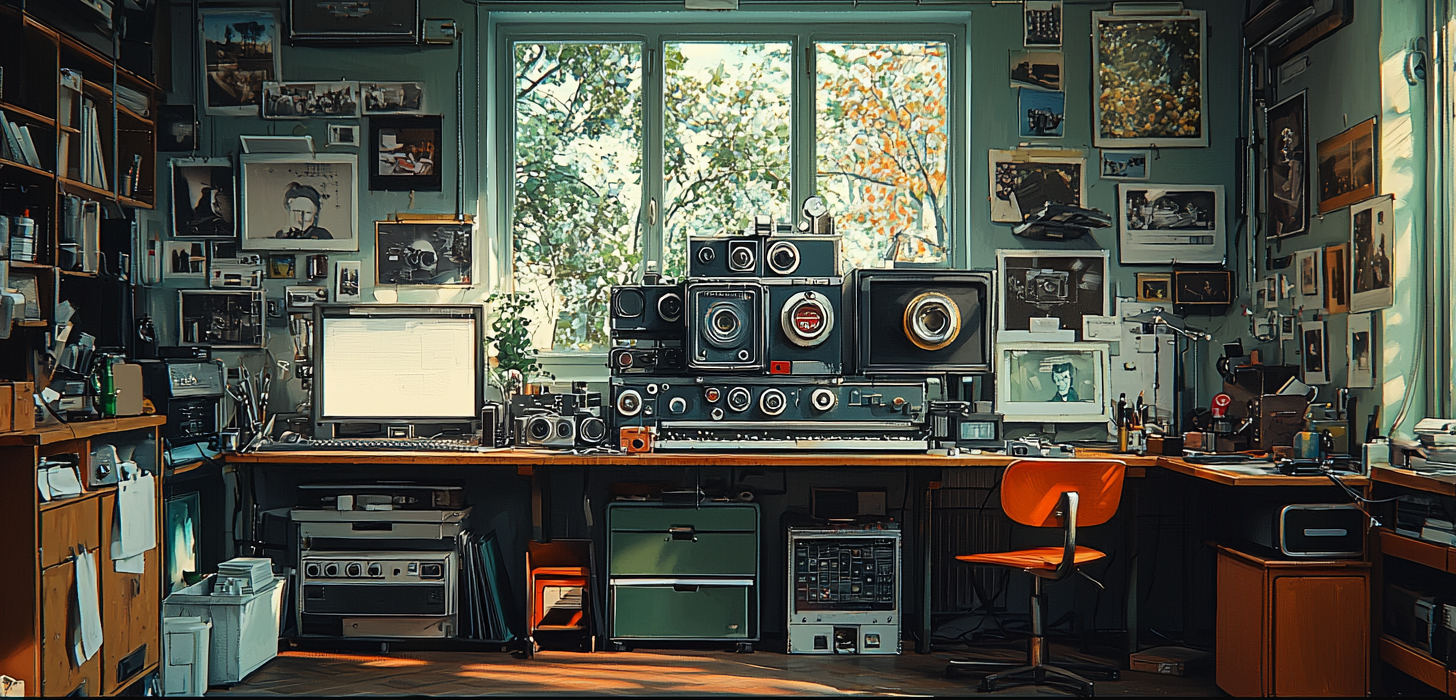
Midjourney prompt for the cover image: A vintage camera workshop in Finland, showing a dedicated technician repairing an old Leica camera, surrounded by intricate mechanical parts and photographs, warm ambient lighting highlighting the craftsmanship, Sketch Cartoon Style --ar 16:9