
The video provides an insightful look into Tesla's latest venture under Elon Musk's leadership, focusing on autonomous vehicles, particularly the introduction of the robo-taxi or "cybercab." Musk's vision for Tesla extends beyond traditional automaking into the domain of advanced AI technology as he aims to revolutionize the transportation industry through self-driving capabilities. This transformation targets not only individual vehicle owners but also the rideshare industry, promising a future where cars can operate autonomously without direct human intervention.
The challenge lies in the complexity of achieving a fully autonomous vehicle that operates safely and efficiently in various environments. While Tesla has made progress with driver-assistance systems and software like autopilot and Full Self-Driving (FSD), the concept of a car that handles all driving situations autonomously remains daunting. Regulatory hurdles and technological challenges persist, especially concerning safety standards and the ethics of autonomous vehicles in potentially fatal accidents or traffic disruptions.
Main takeaways from the video:
Please remember to turn on the CC button to view the subtitles.
Key Vocabularies and Common Phrases:
1. autonomous [ɔːˈtɒnəməs] - (adjective) - Functioning independently without human intervention. - Synonyms: (self-governing, independent, self-sufficient)
An autonomous car that doesn't just drive on its own, but can operate without you, the owner, even being in it
2. robo-taxi [ˈrəʊbəʊ-ˈtæksi] - (noun) - A self-driving taxi or vehicle offering autonomous ride-hailing services. - Synonyms: (self-driving cab, automated vehicle, AI-driven taxi)
The most important thing as he sees it, is the robo taxi, or what Tesla is calling the cybercab.
3. autopilot [ˈɔːtəʊˌpaɪlət] - (noun) - A system used to control the path of a vehicle without constant guidance of a human operator. - Synonyms: (automatic pilot, automatic navigation, self-steering)
Tesla has one of the best driver assistance systems in a car. Tesla sells software known as autopilot.
4. geofencing [ˈdʒiːəʊˌfensɪŋ] - (noun) - A technology that defines geographic boundaries and triggers a response when a device enters or leaves the area. - Synonyms: (location monitoring, spatial filtering, geographical restriction)
Waymo very slowly and very methodically rolled out their technology in specific geographic areas, and they very carefully mapped the terrain of the cities where they're operating it's called geofencing.
5. lidar [ˈliːdɑːr] - (noun) - Technology using laser light to gauge distances and generate precise images of the environment. - Synonyms: (laser imaging, remote sensing, radar alternative)
The difference between Tesla and how other automakers approach autonomy is its use of light detection and ranging, or lidar, technology.
6. complacency [kəmˈpleɪsənsi] - (noun) - A feeling of quiet satisfaction or security, sometimes unaware of potential danger. - Synonyms: (self-satisfaction, smugness, contentment)
We've seen a lot of accidents because a lot of Tesla drivers get lulled into a sense of complacency, and they think that the car can do more than it really can.
7. ethical [ˈɛθɪkəl] - (adjective) - Relating to moral principles or the branch of knowledge dealing with these. - Synonyms: (moral, principled, righteous)
That's gonna be like a complicated ethical argument that people are gonna have to wrestle with.
8. veil [veɪl] - (noun) - A piece of fine material worn to protect or conceal, often used metaphorically to suggest secrecy or concealment. - Synonyms: (covering, screen, mask)
...Tesla has not lifted the veil on exactly how much data they collected.
9. depreciating [dɪˈpriːʃieɪtɪŋ] - (adjective) - Diminishing in value over time. - Synonyms: (devaluing, reducing, declining)
So instead of your car being this, like, depreciating asset, it's actually becoming, you know, like, more and more valuable.
10. ambitious [æmˈbɪʃəs] - (adjective) - Having a strong desire for success or achievement. - Synonyms: (aspiring, driven, determined)
Tesla's approach of collecting real world data that constantly educates a powerful AI to drive its autonomous fleet is incredibly ambitious.
Why Elon Musks Robotaxi Is Such a Risky Bet for Tesla
It started an hour and two months late, but it happened. Tesla, the company that led the way in the EV revolution, is taking another leap of faith. Elon Musk is a master at figuring out where the trends are and marketing to those. And AI is hot right now. He wants to keep people thinking of Tesla as the company that is pushing the envelope and is really a tech company, not just an automaker.
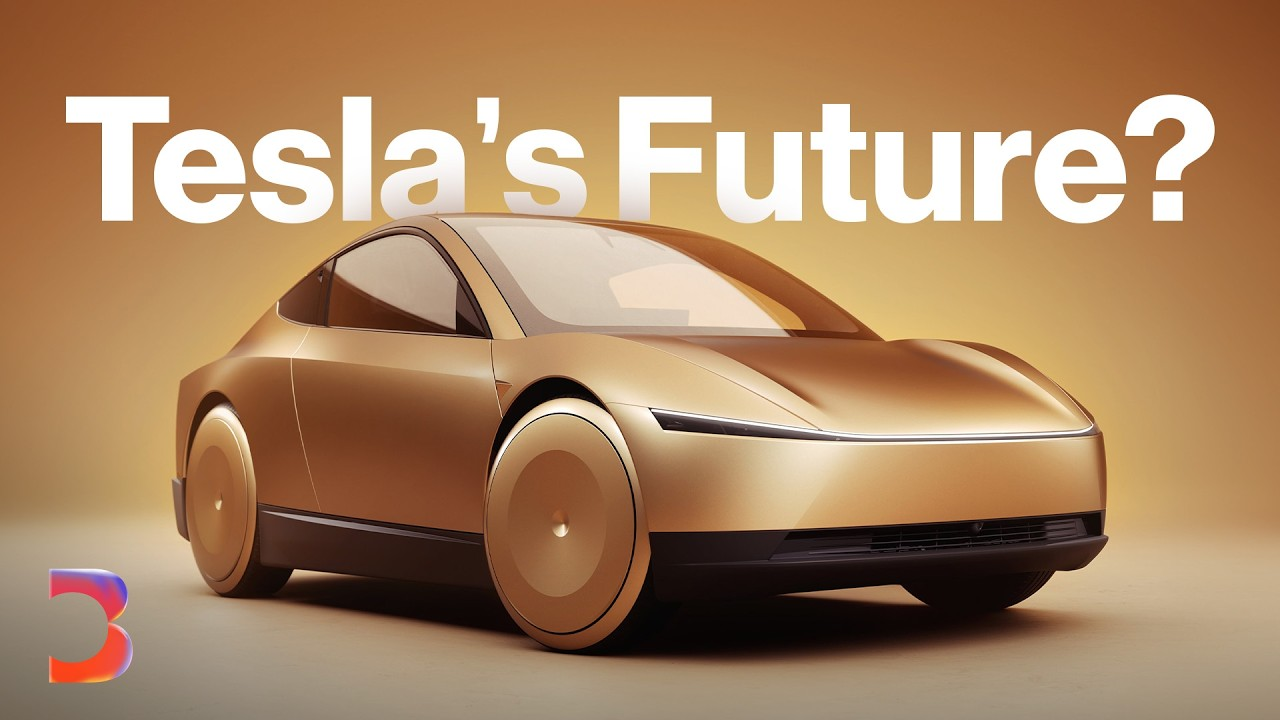
Elon Musk essentially decided that the future of Tesla was not about cars, like a thing with four wheels and a steering wheel that you drive, that the future was autonomy. The most important thing as he sees it, is the robo taxi, or what Tesla is calling the cybercab. And its gambit targets not only the car industry, but ride sharing as well, though some big kinks need to be worked out first.
Watching the event, my first impression was, is this just another Musk rug pull? The human experience as reflected in driving is more complicated than people like Elon Musk thought. It has turned out to be a very hard problem. Next, Tesla's CEO, Elon Musk, unveiling a robo taxi. Really a difficult moment. Make or break for Tesla, the moment of truth. Thats putting it mildly.
Ahead of the October 10 announcement, Tesla had a market value greater than the likes of Toyota and General Motors. Despite selling fewer cars, its shares had been trading at more than 80 times forward earnings. If that means nothing to you, consider the firmly established AI winner. Nvidia trades about 36 times and General Motors in mid single digits. Basically, expectations couldnt have been higher. Investors were really piling into the stock and the lead up to this event, as of April, Tesla shares were down more than 40% for the year. They've come all the way back from that now.
The promise of the self driving car has been in the public sphere for ages. Speed control and guidance become automatic with the flick of an instrument. What I think of as a self driving car is a car where you could take your hands off the wheel, go to sleep, have a drink, whatever, and it takes you where you're going with zero intervention, which is exactly what Elon Musk envisions for Tesla's new vehicle. But some form of this is already here.
Tesla has one of the best driver assistance systems in a car. Tesla sells software known as autopilot. It also sells another version of software that's called FSD for full self driving. This is a system that will essentially allow you to make fewer of the sort of minute by minute decisions of driving. As long as you are there, ready to take over at any time all these car companies basically have some version of this.
But Musk's new vision takes things further. An autonomous car that doesn't just drive on its own, but can operate without you, the owner, even being in it. The idea is like a combination between Uber and Airbnb. If I own a Tesla, it can drive me to work. But if I'm on vacation and I want to make money, I can, like, lend my Tesla to this shared autonomous robotaxi fleet. So instead of your car being this, like, depreciating asset, it's actually becoming, you know, like, more and more valuable
Tesla, because they are basically designing most of the hardware in the car and writing most of the software, has an ability to essentially, like, send software updates to their cars the same way that Apple does with their iPhones. So the idea is that at some point, you would get this over the air update that would turn your car into a robo taxi. Your three NY will be, will achieve unsupervised full self driving with permission in wherever regulators essentially approve it in the US, and then to follow in outside the US, the end customer is the passenger. Essentially, it's the person who presses the button on the still, you know, not released Tesla Robotaxi app and pays money for that ride.
And then how the money gets divided up is kind of an open question. But it's probably some combination of the person who owns the actual hardware and then Tesla itself. And if this sounds a little too good to be true, maybe it is. Someone is going to have to maintain these cars. I mean, these vehicles are going to need to be cleaned. They're going to need to be serviced. They're going to need to be charged to, like, have a national car that could go anywhere at any time at, like, the kind of scale that Elon Musk is talking about. Like, this is going to be a huge and complicated problem that regulators have not even, like, begun to really grapple with
The regulatory regime in the United States. There's sort of what's considered five levels of autonomous driving, level one being the lowest, level five being the highest. Tesla cars that are on the road today have what's known as level two, which means that legally and morally, like, the human driver, is supposed to be in control at all times. The company that is really leading the way in terms of autonomous driving so far has been Waymo, which spun out of Google. Waymo very slowly and very methodically rolled out their technology in specific geographic areas, and they very carefully mapped the terrain of the cities where they're operating it's called geofencing.
The difference between Tesla and how other automakers approach autonomy is its use of light detection and ranging, or lidar, technology. That's like a big sensor suite that helps to kind of map the immediate environment around the vehicle. Tesla does not use lidar. It's frigging stupid. It's expensive and unnecessary, he says. You know, you got two eyes. There's no laser in your brain that's doing this. Therefore, cameras should be good enough to drive a car.
So there's, like, an ideological component, but I think it's really a practical component because Tesla is selling a consumer good. And these lidar sensors, like a Waymo cardinal, would cost hundreds of thousands of dollars if you tried to build it. So Tesla can't do that because it would lose a fortune. So they're using just cameras and software. They basically just unleashed their software on their consumers and gained a lot of information from the data that they collect from their fleet. Tesla would argue that their real world data is more robust than the data that, say, a Waymo collects. You know, not all data is created equal.
And Tesla cars are typically more focused on freeway driving, and they maybe have not done as much testing in cities, but we really don't know, because Tesla has not lifted the veil on exactly how much data they collected. Tesla's approach of collecting real world data that constantly educates a powerful AI to drive its autonomous fleet is incredibly ambitious. But conceptually, it isn't so different from the way humans learn. American drivers are, by and large, not that great. We have roughly 40,000 deaths year because of speeding, distracted driving, drug and alcohol use.
Tesla and these other autonomous car companies are saying our technology will sometimes make a mistake. It might even be a fatal mistake. But in the long run, humans also make fatal mistakes. The problem there is when a mistake happens, whether a human driver would have done it. Are we as a society going to be okay if we introduce a new fatality, like autonomous cars plowing into kits? That's gonna be like a complicated ethical argument that people are gonna have to wrestle with. We've seen a lot of accidents because a lot of Tesla drivers get lulled into a sense of complacency, and they think that the car can do more than it really can.
We've seen lawsuits. I mean, one thing that really messed up cruise, the GM company, and has been a factor for Waymo is the fact that it's not just about being safe. It's about, like, not messing up the flow of traffic. So when can the world expect the robo taxi revolution to begin? Well, in his own words. Well, I tend to be a little optimistic with time frames, but in 2026. So, yeah, before 2027, let me put it that way.
But the Cybercab's development and deployment roadmap will be a significant new test of shareholder and customer patience. Cybercab was, in many ways, what we expected. Investors I spoke to pointed out something important. There was not much discussion of the business model. It was thin on detail and thin on discussion. There was no mention of China and very little about the United States. This was a company that needed more affordable vehicles in order to keep up the growth that everybody was getting used to.
And we just don't see any indication that that's actually coming. The $25,000 Tesla that, you know, Elon Musk promised everybody back in 2020, that got scrapped, that got put to the side in pursuit of this robotaxi. But to the true believers, this is a guy who rescues astronauts from the International Space Station and lands rockets on drone ships. No one ever believed that that was possible. So, you know, there's a lot of adage here in Silicon Valley, elsewhere, like, don't bet against Elon, love him or hate him, he's definitely somebody who's having a huge impact on the world and also who is pretty unpredictable. He's betting the company on this technology. It's a very, very risky bethe.
Artificial Intelligence, Entrepreneurship, Technology, Tesla, Robo-Taxi, Autonomous Vehicles, Bloomberg Originals