

"The best way to reduce tobacco-related harm is by reducing tobacco consumption." — Singapore Health Promotion Board
Introduction to Tobacco Control in Singapore
Singapore is renowned for its strict laws and policies aimed at promoting public health, particularly concerning tobacco consumption. The country has implemented a multifaceted approach to deter smoking, addressing the issue through stringent regulations and comprehensive public health campaigns. Smoking rates in Singapore have seen a significant decline over the years, largely attributed to the effective measures and regulations enforced by the government.
Historical Context
The battle against tobacco in Singapore began in earnest during the 1970s when concerns over health risks associated with smoking gained prominence. In response, the government initiated a series of measures that laid the groundwork for the robust tobacco control policies seen today. Over the years, Singapore has adopted several landmark policies to restrict smoking, which can be broadly categorized into the following:
- Public Awareness Campaigns: Educational programs that inform citizens about the dangers of smoking and second-hand smoke.
- Legal Restrictions and Regulations: Legislation focusing on the control of tobacco sales, marketing, and consumption.
- Health Initiatives: Programs designed to support individuals in quitting smoking and to promote an overall healthier lifestyle.
Key Regulations on Cigarette Consumption
The following sections detail the key regulations impacting cigarette consumption in Singapore, highlighting the complexities of the laws and the intentions behind them.
1. Minimum Age Requirement
The legal age for purchasing tobacco products in Singapore is 21. This regulation, implemented in 2019, aims to prevent young people from starting to smoke, recognizing that the earlier an individual begins smoking, the more likely they are to become addicted.
2. Plain Packaging and Health Warnings
Singapore mandates plain packaging for all tobacco products, which eliminates branding and design elements that could attract new smokers. Instead, packages must feature graphic health warnings covering at least 75% of the front and back surfaces. The objective is to convey the serious health risks associated with smoking and to deter potential smokers from making the purchase.
3. Point-of-Sale Restrictions
To further discourage smoking, tobacco advertising at points of sale is strictly limited. Retailers are prohibited from displaying tobacco products openly; instead, they must be kept behind closed cabinets. This visibility restriction reduces impulse purchases and attempts to quash the allure of tobacco products.
4. Smoke-Free Areas
Singapore has designated numerous smoke-free zones, including public places like parks, bus stops, and certain buildings. Banning smoking in these areas protects the non-smoking public from the effects of second-hand smoke and promotes a healthier environment. Penalties for violating the smoking ban can be steep, deterring smokers from lighting up in prohibited locations.
5. Increased Taxes and Prices
In line with World Health Organization guidelines, Singapore imposes high taxes on tobacco products to discourage smoking. The government regularly reviews and adjusts tobacco taxes, which results in increased prices for cigarettes and other tobacco products. This economic barrier serves as a significant deterrent, especially for younger smokers or those with lower incomes.
Health and Social Campaigns Addressing Tobacco Use
Accompanying these stringent regulations are numerous health campaigns spearheaded by the Health Promotion Board and other organizations addressing tobacco use:
- Quit Smoking Programs: Initiatives that provide resources and support, including nicotine replacement therapy (NRT) and counseling services to assist individuals in quitting smoking.
- Public Health Campaigns: Ongoing campaigns such as "I Quit" and "Say Yes to Life, No to Tobacco" foster an environment that actively opposes tobacco use and encourages healthier lifestyles among the population.
The Impact of Regulations on Smoking Rates
Due to Singapore's comprehensive tobacco control efforts, smoking rates have gradually declined. According to the National Health Survey, the prevalence of smoking among adults decreased from 18.3% in 2010 to 10.6% in 2020. These statistics reflect the positive impact of the government's initiatives on public health and the changing perceptions regarding smoking.
Challenges and Ongoing Efforts
While significant advancements have been made, challenges remain in further reducing smoking prevalence, particularly among specific demographics, such as certain ethnic groups and lower-income communities. Future efforts may focus on:
- Targeted Interventions: Programs tailored to specific groups that consider cultural, socioeconomic, and behavioral factors influencing smoking habits.
- Continued Education: Ongoing public education campaigns to ensure the population remains aware of the dangers of tobacco use.
Conclusion: A Model for Tobacco Control
Singapore's strict cigarette restrictions and proactive health initiatives serve as a model for other countries grappling with high smoking rates. By combining legislative measures with public health campaigns, Singapore aims to create a smoke-free environment that prioritizes the health of its citizens. The city's evolving tobacco control policies continue to adapt based on emerging research and social dynamics, ensuring that the fight against tobacco consumption remains a top public health priority.
"Our ultimate goal is a smoke-free nation, where tobacco does not impact health or the environment." — Singapore Health Promotion Board
Through its comprehensive and forward-thinking approach, Singapore stands at the forefront of global tobacco control, demonstrating what can be achieved through a blend of effective laws and public health advocacy.
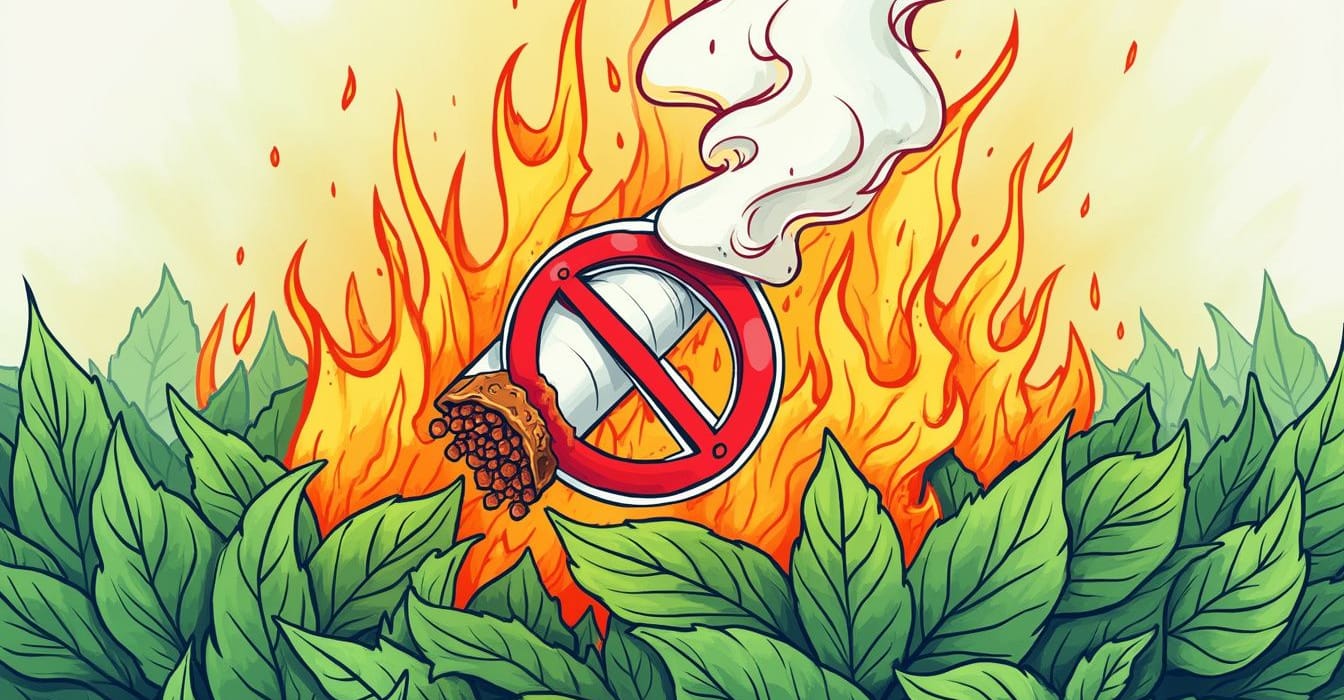
Midjourney prompt for the cover image: An abstract illustration representing Singapore's smoking ban: a stylized cigarette with a prohibition symbol, surrounded by flames that turn into green leaves, conveying health and freshness, in a vibrant and colorful Sketch Cartoon Style.