
In a world increasingly defined by the rapid advancement of technology, the notion of dialogue has taken on an urgent new agenda—the potential to reshape learning, agency, and our fundamental interactions with information and each other. As we stand at the intersection of traditional understanding and innovative digital dialogues, we witness what could be the most transformative force since the advent of the book.
This essay explores the journey from the Socratic method of teaching to the contemporary age of generative artificial intelligence (AI), emphasizing the profound changes in our approach to learning and the urgent need to reclaim our agency in a world beset by disengagement and despair.
A Personal Countdown to Learning
Reflecting on my own career trajectory, I consider myself incredibly fortunate. Embarking on my professional journey at Harvard Business School as a professor opened my eyes to the intricate art and science of learning. These early years not only shaped my teaching philosophy but also ignited my passion for understanding dialogue's potential as a catalyst for learning.
Socratic teaching, characterized by asking questions rather than delivering answers, values dialogue's power to foster critical thinking and self-discovery. As I delve deeper into this exploration, I firmly believe that the recent arrival of digital dialogue—specifically through generative AI—presents a compelling opportunity to reshape our education landscape.
The evolution from passive absorption of information to active, conversational learning marks a critical shift. In today's context, generative AI serves as a "hive mind," providing a new dimension in dialogue that empowers individuals to engage deeply and own their learning experiences.
The Crisis of Disengagement
Before we fully appreciate the potential of digital dialogue, it is vital to confront a pressing issue: the pervasive lack of agency observed across various societal sectors. Gallup's statistics unveiling that two-thirds of employees feel disengaged from their work encapsulate this crisis of agency. Additionally, alarming trends in youth mental health—such as a 60% increase in contemplated suicide rates among high school students since the onset of the COVID-19 pandemic—deepen this crisis.
This malaise is rooted in a lack of learning opportunities, growth, and the perpetual feeling of hopelessness that so many experience. As society grapples with overwhelming challenges—from educational frameworks to workplace dynamics—it's clear there is an urgent need to reignite the thirst for knowledge and foster environments where dialogue flourishes.
The Birth of Digital Dialogue
November 2022 may very well be recognized as a watershed moment in the evolution of communication and learning—the birth of what we now term "digital dialogue." For the first time, machines began to engage in two-way conversations with humans, breaking the historical pattern that relegated our discussions to one-sided exchanges, where humans spoke, and machines absorbed data silently.
Looking at the long arc of automation that has shaped our world over the past century and a half, we can trace a direct line from the labor of manual workers to the rise of intelligent systems. The historical model has largely been a unidirectional transfer of knowledge, where conversation ceased to be genuine dialogue. Famous philosopher Karl Marx articulated the alienation this caused in society. In this new era, with the emergence of AI that initiates and engages in conversation, we reach a crucial turning point—one that has significant implications for learning and agency.
The Science of Dialogue in Learning
Research shows that the formative years—ages 0 to 3—are critical in shaping an individual’s cognitive development. When children are actively engaged in dialogue with caregivers, their brain structures are positively influenced; their attention spans improve, and they exhibit greater social and emotional understanding. This insight underscores the fundamental role of conversation and storytelling as our societal operating systems. They represent not just methods of communication but essential scaffolds for cognitive growth.
The traditional educational model, adopted more than a century ago, replaced personalized tutoring with a one-size-fits-all approach best characterized by mass lectures and standardized curricula. In doing so, we lost the essence of learning through dialogue—a critical ingredient in nurturing inquisitive, self-directed learners.
The Power of Tutorials Over Traditional Education
The consequences of advancing toward a tutorial model of learning are significant. Studies, notably by Benjamin Bloom in 1984, highlight that tutorial learning methods produce students who outperform their peers from conventional education settings by two standard deviations. This staggering statistic suggests that those who learn through dialogue and personalized attention can consistently achieve far superior outcomes.
Khan Academy has emerged as a transformative organization, implementing a tutoring model that prioritizes ongoing dialogue rather than isolated instruction. Innovations like "Khanmingo," a personalized AI tutor, further elevate the tutorial approach beyond mere knowledge dissemination into a dynamic, interactive relationship between tutor and learner.
Real-World Applications: A Case Study
During my tenure with PwC, I encountered the potential of AI-assisted tutorials firsthand. As an illustration, consider the onboarding experience of a new tax manager. In traditional setups, this process would involve a daunting array of paperwork and formal training sessions—often devoid of personalization and depth.
By employing an AI tutor, we were able to create a far richer learning pathway: laying out a structured developmental program tailored specifically for the individual’s needs and the unique landscape of PwC. This tailored guidance enabled new employees to gain historical context around the organization, understand strategic imperatives, and participate in a meaningful assimilation process—thus ensuring a more engaged and informed workforce from day one.
Reclaiming Agency Through Digital Learning
The implications are profound: organizations that harness the potential of AI-driven tutorials can empower their employees to take control of their learning experiences. When personalized learning pathways become the norm, individuals gain autonomy over their professional development. This agency is essential in a world marked by uncertainties and challenges.
With the capacity to curate a personalized experience by interacting with different tutors on any desired topic or skill set, learners are no longer passive recipients of knowledge. Instead, they become active participants in their journeys toward intellectual empowerment.
Revamping Education for the Modern Age
The critical need to revolutionize education resonates strongly, urging us to depart from outdated industrial models that have failed to adapt. By invoking Socratic principles within a technological framework, we can re-establish a learning environment that fosters dialogue, inquiry, and critical thinking through adaptable, open-ended curricula.
Education should be a fluid model, one that accommodates varying paces of growth and understanding. Instead of locking students into rigid schedules, we must create dynamic ecosystems in which students and technologies interact, facilitating growth through seamless dialogue.
Embracing AI as the New Interface
As we envision the future of education and organizational learning, it is clear that AI represents a vital conduit for transformation. The functions typically associated with educational tools must evolve to include intelligent, responsive interfaces—ones that adapt to individual needs and facilitate genuine engagement rather than merely providing static information.
Imagine car diagnostics or washing machine troubleshooting featuring AI tutors that guide users through problem-solving processes! The possibilities are endless, underscoring the necessity of integrating these teachings into mainstream learning.
Conclusion: The Call to Action
In our quest to enhance agency and enrich our societies, we must embrace the tools of our time. The emergence of digital tutors presents an extraordinary opportunity to elevate learning and reclaim our capacity for meaningful dialogue. If we fail to teach students, employees, loved ones, and ourselves how to utilize these digital resources effectively, we risk missing out on a fundamental transformative power.
As we stand on the threshold of a new era in education and communication, the call is clear: cultivate environments that promote dialogue—between ourselves, our students, and the remarkable systems we now have at our disposal. By embracing the potential of generative AI and the tutorial learning model, we can empower individuals to own their intelligence, chart their destiny, and construct a future rich in learning and understanding.
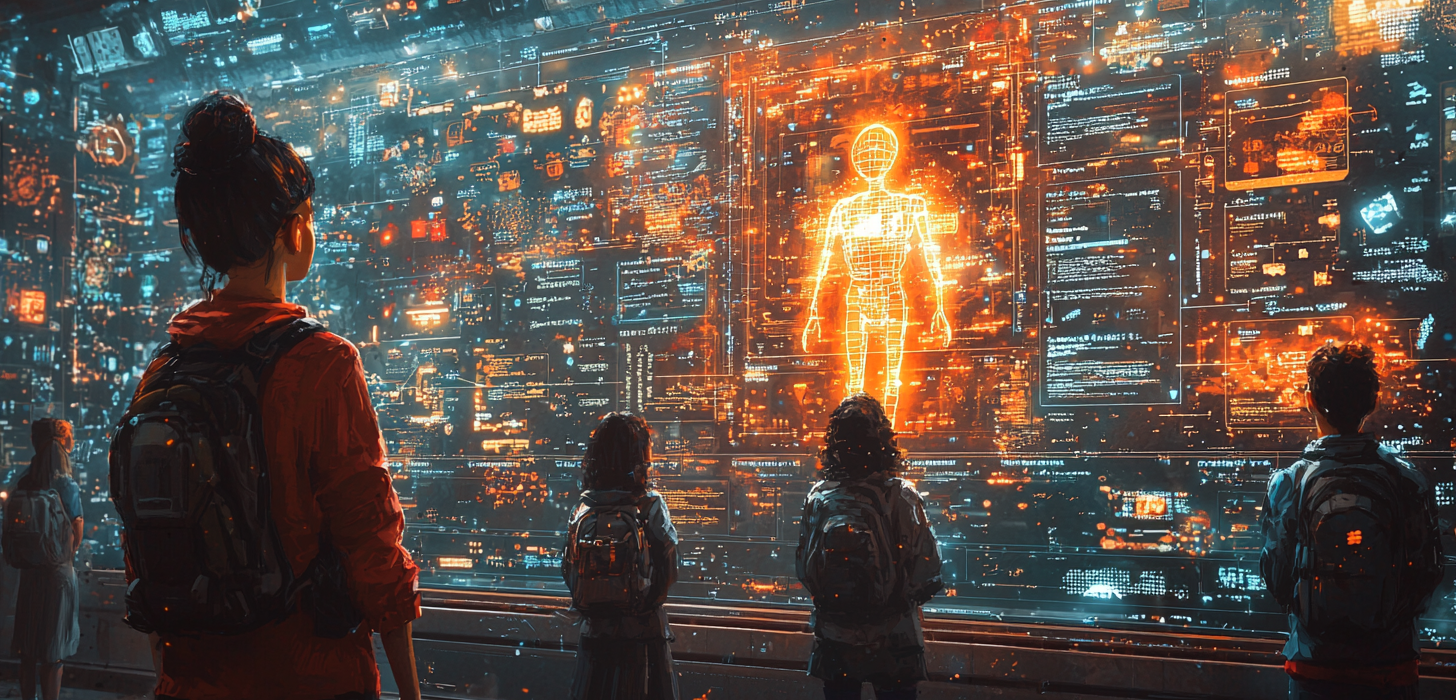
Midjourney prompt for the cover image: An imaginative representation of a classroom blending traditional Socratic dialogue with advanced generative AI technology, featuring diverse students interacting with holographic mentors, vibrant learning environment, futuristic elements illustrating digital dialogue tools, Sketch Cartoon Style --ar 16:9